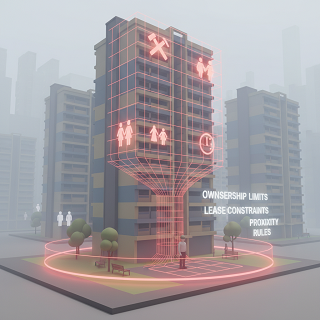
Why is living in HDB flats restricted? Prohibited activities include loud noises, using the flats for workshops or as business shops, placing excessive items in corridors, and various other restrictions that flat dwellers may not be aware of.
Restrictions in your HDB flat aren’t just about being annoyingly strict – they’re built around one simple idea: you’re not the only one trying to live peacefully here. So when you blast music at 1 a.m., turn your living room into a welding shop, or stack ten plastic crates in the hallway, you’re not just breaking rules – you’re disrupting an entire community. And trust me, your neighbours notice. These limits exist because high-density living means shared walls, shared spaces, and shared responsibility. It’s not about control. It’s about making sure everyone gets a fair shot at a decent, quiet, clean place to call home – without stepping on each other’s toes. Or their space. Or their sleep.
Why do we even have all these rules anyway?
It’s basically about living together without losing our minds
You’re sharing walls, floors, and airspace with hundreds-sometimes thousands-of other people. One person’s convenience can quickly become another’s nightmare. That’s why noise limits exist, why you can’t stack ten cardboard boxes in the hallway, and why your neighbour can’t turn their unit into a welding shop. It’s not about control-it’s about sanity.
Keeping that old kampong spirit alive in a high-rise
Back in the kampong days, people looked out for one another because they had to. There was no formal system-just mutual respect. Now, that same spirit has to be built into rules, simply because we’re packed so tightly together. The rules don’t kill community-they try to preserve it.
Imagine your neighbour running a paint-mixing business from their flat. Fumes drift through shared vents. Delivery trucks block the walkway every hour. The floor trembles from machinery. That’s not just annoying-it’s a health hazard. HDB’s regulations prevent these situations before they start, ensuring your home stays a home, not a side hustle zone. They’re not killing dreams-they’re protecting lives.
Why the government’s actually watching out for us
It’s easy to see rules as overreach-until something goes wrong. Then you realise they were the only thing keeping things from falling apart. Safety, fairness, and long-term livability-that’s what these rules quietly defend. They’re not about punishment. They’re about prevention.
Take fire safety. A cluttered corridor might seem harmless-until it becomes a death trap during an emergency. Or consider structural damage: drilling into load-bearing walls for shop fittings can compromise an entire block. The government isn’t hovering-it’s making sure one person’s choices don’t endanger everyone else. These rules are the quiet backbone of collective safety, not bureaucratic noise.
Keep it down! The real deal on noise complaints
Someone’s drill wakes you at 8 a.m. on a Saturday. You grit your teeth. It’s not illegal-but it’s definitely pushing the line. HDB doesn’t ban noise outright, but they do set clear limits on when and how much disruption is acceptable. Excessive noise at unreasonable hours is one of the top reasons for neighbour disputes, and yes-authorities will step in if it keeps happening.
When drilling and hammering starts getting on everyone’s nerves
Renovations are noisy-we get it. But HDB restricts loud work like drilling to specific hours: weekdays and Saturdays, not on Sundays or public holidays. Going outside these windows can trigger complaints-and fines. Even if you’re excited to finish fast, keep it civil. Your neighbours aren’t your construction crew.

What’s the deal with those late-night karaoke sessions?
Singing your heart out at 11 p.m. might feel freeing-until the knock comes. Unreasonable noise after 10 p.m. is a red flag, especially if it happens regularly. That mic’d-up living room? It’s not a lounge. HDB sees it as a disturbance risk, and repeated incidents draw warnings fast.
One resident in a Tampines block hosted weekly late-night singalongs, windows wide open. Neighbours tolerated it once-maybe twice. By the third month, someone filed a formal complaint. The town council stepped in. What seemed like harmless fun turned into a written warning. It’s not about killing joy-it’s about shared walls and sleep. Sound carries. And so do consequences.
Your flat isn’t a factory or a shopping mall
Turns out, your HDB flat was never meant to double as a storefront or a production line. The rules are clear: residential spaces are for living, not for running businesses. That means no customers walking in off the street, no inventory stacked in your living room, and definitely no machinery humming away at 2 a.m.
Why you can’t just open a walk-in shop in your living room
You might think turning your flat into a boutique or café is a clever side hustle – but HDB doesn’t agree. Using your home as a commercial space violates your lease, and neighbors aren’t obligated to tolerate foot traffic, deliveries, or constant doorbell rings. It’s not just inconvenient – it’s against the rules.
Honestly, your home isn’t meant for heavy industrial workshops
Running a metal fabrication job or a woodworking setup from your flat? That’s a hard no. HDB units aren’t built to handle industrial equipment, fumes, or fire hazards. The structure, ventilation, and safety systems in your block are designed for homes – not welding stations or heavy machinery.
Think about it – your downstairs neighbor probably doesn’t want the constant vibration of a drill press or the smell of soldering fumes drifting up through the floor. One mid-sized SaaS firm might operate from a home office just fine, but that’s light admin work – not grinding metal or running a printing press. These restrictions exist to protect everyone’s safety and comfort, not just to be difficult.
The corridor isn’t your personal storage unit
That narrow walkway outside your door? It’s not an extension of your living room. You might think stacking a few extra chairs or leaving your shoe rack just beyond the doorway is harmless-after all, it’s “your” space, right? But it’s actually a shared escape route. And when every inch counts during an emergency, blocking the path can cost lives.
Why blocking the path is actually a huge fire hazard
Fire spreads fast, but panic spreads faster. When smoke fills the corridor, people rely on clear, instinctive paths to get out. Even a single folded bicycle or a carton of stored books can become a deadly obstacle. In high-rise buildings, seconds matter-and clutter eats up those seconds.
My take on the mini-jungle of plants outside your door
Those potted ferns and lucky bamboo look lovely-until they’re in the way. Sure, greenery adds charm, but when your little garden spills into the walkway, it’s no longer just decoration. It becomes a tripping risk and a barrier during evacuation. A pretty plant won’t help when someone’s crawling through smoke.
Let’s be real-most of us don’t think twice about adding a few pots near the entrance. One turns into three, then suddenly you’ve got a balcony-worthy display creeping into the common path. I’ve seen units where the corridor looks like a nursery outlet. But here’s the thing: during a fire drill at a Block 328 in Toa Payoh last year, responders flagged those exact plant clusters as serious hindrances. No one got hurt-but it was a wake-up call. Your love for gardening doesn’t have to end at the doorstep, but it does need boundaries. Keep it tight, keep it inside your door frame, and everyone stays safer.
Sneaky rules you probably didn’t even know existed
Yeah, you’ve read the HDB handbook. You know the big stuff. But some rules fly under the radar – the kind that don’t make dinner table chat until someone gets a warning letter. And no, we’re not talking about obvious things like running a welding shop from your living room. These are the quiet offenders. The ones you’d never think twice about – until a neighbor snitches or an enforcement officer knocks on your door.
Is that pet actually allowed or are you just hiding it?
Only dogs and cats under specific size and breed limits are permitted – everything else is technically illegal. That hamster in your kid’s room? Fine. The medium-sized mutt you adopted from a friend? Big problem. HDB doesn’t mess around. Even if your dog is sweet as pie, if it’s not on the approved list, you’re skating on thin ice.
Short-term rentals like Airbnb are a big fat nope
Letting out your flat on Airbnb, even for a weekend, is strictly prohibited. It doesn’t matter if you’re away on vacation or trying to earn a little extra cash. HDB flats are for owner-occupation only. No exceptions. Get caught, and you could face fines – or worse, lose your flat.
Think of your HDB flat like a home loan with rules attached – one of them being you actually live there. Short-term rentals blur the line between private residence and commercial property, and HDB hates that. They’ve caught people listing their units under fake names, using lockboxes, even running mini-hotels with daily cleanings. Enforcement officers do random checks, sometimes posing as guests. Once flagged, the penalties stack fast – back taxes, fines, and possible repossession. Not worth the few hundred bucks you made from that couple from Sydney.
What’s up with hanging dripping wet laundry?
Hanging soaking wet clothes over your balcony rail where water drips onto neighbors below is against the rules. It’s not just annoying – it’s a legit complaint. Even if you’re trying to save on electricity, letting laundry drip-dry onto someone’s dinner table or stroller isn’t cool. And yes, people have been reported for it.
Damp clothes aren’t just a nuisance – they’re a potential health hazard. Constant dripping encourages mold growth on lower floors and damages paint and fixtures over time. HDB encourages using drying racks indoors or ensuring clothes are at least partially spun dry before hanging. Some newer estates even have shared drying rooms to help ease the squeeze. It’s not about controlling your laundry habits – it’s about not making your neighbor’s life miserable in the process.
What happens if you’re caught breaking the rules?
Getting that dreaded letter from the authorities
You’ll get a formal notice from HDB or the town council. It’s not just a warning – it’s a record. Repeated violations can lead to fines or even legal action. That letter means they’re watching, and they’re not going to let it slide next time.
How to handle neighbors who just won’t follow the rules
Start with a polite conversation – sometimes people don’t realize they’re causing issues. If that fails, report it. HDB takes complaints seriously and will investigate. Anonymous reporting is an option if you’re worried about tension.
One resident in a Tampines block dealt with a neighbor storing furniture and plants in the corridor for months. After multiple warnings and no change, HDB issued a $1,000 compound. The items were removed – not because the neighbor finally agreed, but because the penalty hurt. Enforcement works, but it often takes persistence. Don’t assume nothing can be done just because the first step didn’t fix everything.
To wrap up
You might not love all the rules, but they’re there for a reason. Living in an HDB flat means sharing walls, corridors, and quiet evenings with hundreds of neighbors. That’s why you can’t turn your home into a workshop, blast music at midnight, or stack crates of stuff in the hallway. It’s not about control – it’s about making high-density living actually work. One person’s convenience is another’s headache. And nobody wants to be that neighbor.
FAQ
Q: Why can’t I run a small business from my HDB flat?
You can’t run a business because HDB flats are meant for living, not working. Sure, you might think selling handmade candles online is harmless. But once deliveries start piling up, neighbours notice the foot traffic. And HDB doesn’t want your home turning into a mini warehouse or customer pickup point. There are exceptions-like approved home-based businesses under the Home-Based Small Scale Industry Scheme-but even then, you’re limited to certain low-impact trades and capped at two non-resident employees.
Q: What counts as excessive noise in an HDB flat?
It’s not just about volume-it’s about timing. Playing music at 80 decibels during the day might fly, but the same level at 10 p.m. is a problem. Normal household sounds are expected. But if your drumming practice echoes through the stairwell, or your late-night gaming sessions come with shouting, someone’s filing a complaint. Even loud vacuuming at 7 a.m. on a Saturday can trigger a noise report. The rule of thumb? If you’d complain about it in your own flat, it’s probably too loud.
Q: Can I convert my HDB unit into a workshop for carpentry or repairs?
Nope. Full stop. HDB doesn’t allow any kind of industrial or mechanical work in residential units. That means no power tools running all weekend, no storing wood planks in the living room, and definitely no clients dropping by to pick up repaired furniture. The risk of fire, noise, and clutter is too high. One resident tried setting up a motorcycle repair corner on their balcony-HDB stepped in fast. It doesn’t matter how tidy you think you are. The rules are strict for a reason.
Q: Is it really against the rules to store things in the common corridor?
Yes, and it’s more serious than you think. That shoe rack, foldable bike, or stack of cardboard boxes in the hallway? All prohibited. Corridors are fire escape routes. Block them, and you’re not just annoying your neighbours-you’re risking lives. HDB and SCDF conduct regular checks. A family in Ang Mo Kio had their items removed and faced fines after refusing to clear their corridor three times. It’s not about being strict. It’s about making sure everyone can get out safely in an emergency.
Q: What happens if I get caught violating HDB rules?
You’ll likely get a warning first. But repeat offences? That’s when fines kick in-hundreds of dollars, not pocket change. And if you keep ignoring the notices, HDB can take legal action. One tenant in Toa Payoh kept running an unlicensed tuition centre from their flat. After multiple warnings, they were fined and the lease was terminated. Losing your flat over a side hustle? Not worth it. Enforcement isn’t always instant, but it’s real.
Q: Can I keep pets other than cats and dogs in my HDB flat?
Depends. You can keep small animals like hamsters, rabbits, or birds without special approval. But exotic pets? Think reptiles, ferrets, or sugar gliders-those are a no-go. Even if your pet is quiet and clean, the rules are based on public health and safety concerns. A resident once tried keeping a turtle pond on their balcony, arguing it was “low maintenance.” HDB ruled it a hygiene risk and ordered it removed. Stick to approved pets unless you want a knock on your door.
Q: Are there hidden rules about renovations I should know about?
Loads. You can’t knock down any wall without checking if it’s structural. Even drilling into certain walls can be a problem. And don’t think you can just extend your kitchen into the balcony-ventilation and building codes apply. One couple in Punggol added a false ceiling with hidden LED strips, only to be told they needed prior approval. They had to dismantle part of it. Always check with HDB or a licensed contractor before making changes. What looks like a small upgrade could violate regulations you never knew existed.
Related Articles and Product Recommendations.