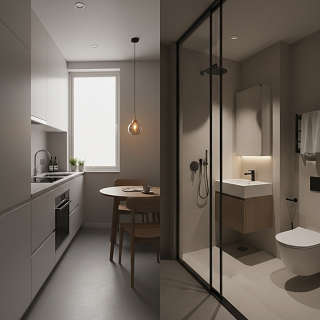
At this point, the problem is no longer about furniture, televisions, or cookware.
It is about a fundamental principle:
Six or more adults sharing a small HDB flat cannot operate as six independent households.
The physical infrastructure simply does not exist.
If everyone insists on:
- Their own cupboards,
- Their own TV,
- Their own cooking utensils and pots,
- Their own cooking times,
- Immediate access to the toilet whenever desired,
then they are effectively demanding six separate homes within one flat.
Geometry, plumbing, and time make that impossible.
The solution is not to determine who is right or wrong. The solution is to distinguish personal ownership from shared infrastructure.
1. Personal Cooking Utensils Are Fine—Personal Kitchens Are Not
There is nothing unreasonable about:
- Having your own wok.
- Using your own knife.
- Owning your own pots.
- Maintaining dietary or religious preferences.
The problem begins when everyone wants exclusive use of:
- The stove.
- The sink.
- The preparation area.
- The refrigerator.
A typical HDB kitchen is designed for one or two people cooking simultaneously.
Practical Compromise
Each person may have:
✅ Their own:
- Small utensil box.
- Personal pan or pot.
- Labelled food containers.
- Dedicated shelf space.
But everyone shares:
- Stove.
- Sink.
- Refrigerator.
- Cooking schedule.
The infrastructure must remain communal.
2. Stagger Cooking Times
If six people all cook dinner between 6:30 and 7:00 PM, conflict is guaranteed.
Instead:
| Time | Group |
|---|---|
| 5:30–6:00 PM | Elderly members |
| 6:00–6:45 PM | Parents |
| 6:45–7:30 PM | Older children |
| Weekends | Flexible rotation |
Another option:
Batch Cooking
One person prepares meals for several days.
Benefits:
- Less waiting.
- Lower utility costs.
- Less kitchen clutter.
- Fewer arguments.
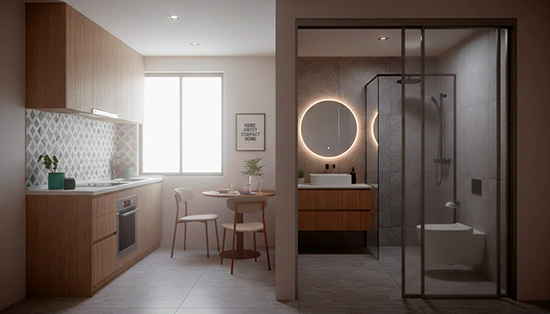
3. The Toilet Problem Is a Mathematics Problem
Suppose:
- One toilet.
- Six people.
- Each spends 20 minutes inside.
That’s two hours of demand every morning.
No amount of goodwill changes this arithmetic.
Solutions
Strict morning schedules
Example:
| Person | Time |
|---|---|
| Parent A | 5:30–5:45 |
| Parent B | 5:45–6:00 |
| Child 1 | 6:00–6:10 |
| Child 2 | 6:10–6:20 |
| Child 3 | 6:20–6:30 |
| Child 4 | 6:30–6:40 |
Rules
- No phones inside.
- No unnecessary lingering.
- Showers capped at reasonable durations.
- Grooming tasks moved to bedroom mirrors.
Many large families worldwide operate this way.
Perhaps setting up a timer device is a better way as a reminder of a utility usage.
4. Differentiate Between Rights and Expectations
Everyone has a right to:
✅ Personal belongings.
✅ Respect.
✅ Privacy where possible.
But no one can reasonably expect the following:
❌ Immediate access to shared facilities at all times.
That includes:
- Bathrooms.
- Kitchens.
- Washing machines.
- Dining tables.
- Televisions.
Shared living means accepting delays and coordination.
5. Create Household Systems Instead of Negotiating Daily
The worst arrangement is the following:
“We’ll decide each day.”
That produces endless arguments.
Better:
Kitchen Rules
- Maximum cooking duration during peak hours.
- Clean immediately after use.
- Label personal cookware.
- Shared appliances belong to everyone.
Bathroom Rules
- Time limits.
- Priority for workers and school children.
- Emergency exceptions only.
Systems reduce friction because people argue less about fairness when expectations are already established.
A4 Size Magnetic Notepad Memo Planner Menu for Refrigerator Magnetic Board
6. The Hard Truth
If six adults each desire complete independence over the following:
- Storage,
- Entertainment,
- Cooking,
- Bathroom access,
Then they are already functioning as six separate households.
A single small HDB flat cannot physically support that level of autonomy.
The sustainable alternatives are:
- Accept shared systems and schedules.
- Reduce possessions and expectations.
- Split into multiple living arrangements when financially possible.
- Upgrade to a larger residence over the long term.
The uncomfortable reality is that community living trades absolute freedom for affordability and togetherness. The more people share a confined space, the more discipline, compromise, and structure become necessities rather than options.