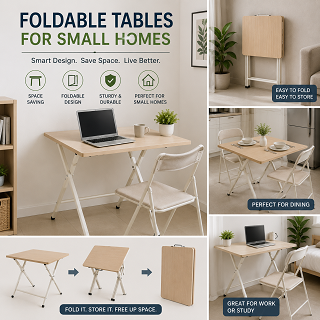
There’s a quiet game-changer hiding in plain sight for your compact space-foldable tables. You’re not just saving square footage… you’re unlocking flexibility. Need a dining spot one minute, a workspace the next? These tables adapt-fast. And when you fold them away, they vanish into the wall or under a bed, leaving zero clutter behind. No more awkward furniture battles-just smart, simple living.
What’s actually out there? The different types you’ll find
You’ve probably seen how foldable tables are popping up in tiny apartments and studio tours all over social media. The market’s packed with smart solutions designed for tight spaces-each with its own twist on saving room without sacrificing style or function. Knowing your options helps you pick what truly fits your daily life.
| Type | Best For |
| Wall-mounted desks | Instant workspace that disappears |
| Drop-leaf tables | Dining or work that folds down when not needed |
| Nesting tables | Extra surface with stackable convenience |
| Gate-leg tables | Stylish expandable dining in small footprints |
Search Here For A Right Folding Table For You
Wall-mounted desks that basically vanish when you’re done
These slick setups mount right into your wall and swing or lift out when you need to work. When the day’s over? Flip it up and it’s gone-freeing up serious floor space. Perfect for studio dwellers who hate clutter.
Classic drop-leaf tables that are seriously life-savers
They’ve been around for ages, but today’s versions are lighter, smarter, and way more stylish. With leaves that fold down, they shrink to the size of a nightstand. One second it’s your dinner table, the next it’s tucked against the wall. You might think old-school furniture can’t keep up, but modern drop-leaf tables are built with space-saving in mind. Lightweight woods, hidden hinges, and slim profiles make them ideal for daily use without the bulk. Some even come with built-in storage or extendable tops for guests. You’re not just buying a table-you’re buying back square footage. And honestly, nothing beats folding it down after dinner and walking into an instantly open room.
What should you actually look for? Important factors to check
Choosing the right foldable table means balancing size, durability, and ease of use.
- Look for a lightweight frame that still feels solid
- Check the folding mechanism – it should snap smoothly into place
- Ensure the surface resists scratches and stains
- Pick a design that supports your daily tasks – eating, working, crafting
After measuring your space and testing materials, the best choice becomes obvious.
Measuring your floor space so you don’t mess up the layout
You’d be surprised how fast a “compact” table eats up room. Always measure the spot where you plan to use it – not just width and depth, but clearance for folding and walking around. Leave at least 18 inches on all sides when open. After sketching the layout, test it with painter’s tape on the floor.
Picking materials that won’t just fall apart after a month
Flimsy particleboard might save a few bucks now, but it warps fast. Go for solid hardwood, powder-coated metal, or high-pressure laminate – they handle daily wear without buckling. After a few weeks of real use, cheap materials show cracks, wobbles, and stains.
Think about how you actually use a table. If you’re setting down hot mugs, spilling coffee, or pulling it out twice a day, the material has to keep up. Metal legs with a crossbar add serious stability, while a laminate top resists both heat and scratches. Wood looks warm but needs sealing – untreated pine dents if you look at it wrong. And honestly, if the hardware feels thin or creaks when you fold it, just walk away. After all, a table should last years, not just survive the return window.
Search Here For A Right Folding Table For You
My top tips for making it look stylish in a small room
Small spaces are all about smart choices, not sacrifices. Stick to light foldable tables with clean lines and pair them with slim-profile chairs to keep things airy. Use a neutral color palette with one bold accent-maybe a bright runner or pendant light. Reflect light with mirrors and go vertical with shelves. Thou can turn even the tiniest corner into a chic, functional zone.
- Choose foldable tables in finishes that match your flooring or walls
- Keep legs slim and materials transparent (like glass or acrylic)
- Style with multi-functional decor-think trays that double as serving pieces
- Anchor the space with a small rug to define the zone
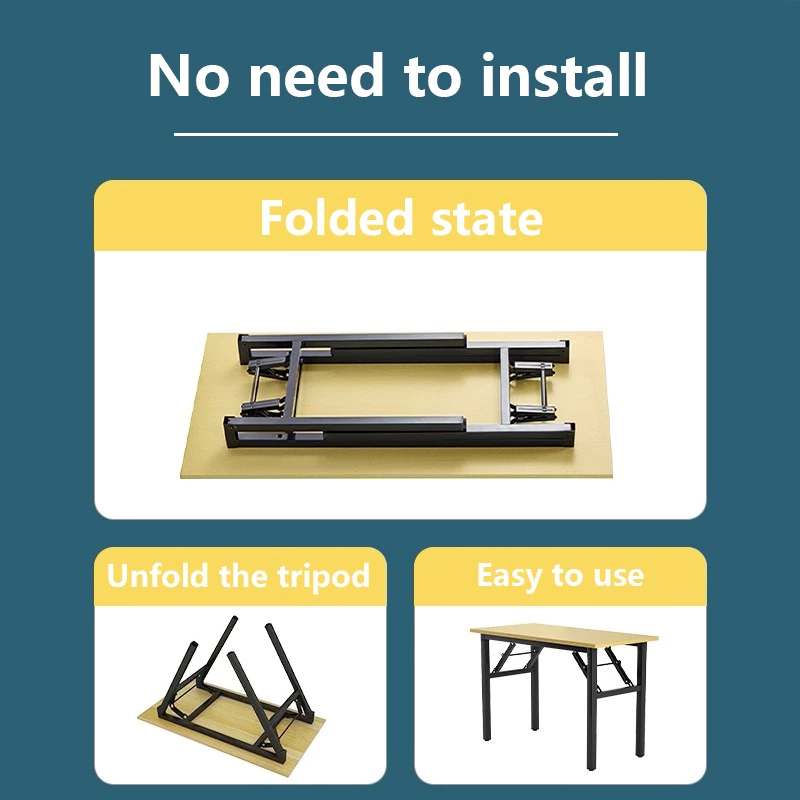
Hiding your table in plain sight when it’s not in use
Wall-mounted foldable tables disappear when folded up-perfect for studio living. Tuck them beside a kitchen nook or behind a door so they blend in. Paint the table the same color as the wall for a stealthy look. Thou can reclaim every inch without losing style or function.
How to use one table for both work and dinner every day
A single foldable table can pull double duty if you set it up right. Keep a slim laptop tray and a placemat ready to swap roles in seconds. Use baskets underneath to store work supplies and dinner linens separately. Thou can switch from Zoom calls to candlelit meals without missing a beat.
Think of your table as a stage-what’s on it defines the scene. During the day, keep your workspace clean with a notebook, laptop, and a small plant. When evening hits, clear the surface fast with a caddy that holds your work gear. Swap in a table runner, some cloth napkins, and a tea light. The same foldable table becomes dinner-ready in under a minute-no heavy lifting, no clutter. Efficiency never looked this good.
Summing up
Drawing together everything you’ve learned, foldable tables aren’t just space-savers-they’re game-changers for small homes. You’ve seen how they fit into tight corners, pop up when needed, and disappear just as fast. Need a dining spot? A workspace? A surface for coffee and your phone? It’s all possible without clutter. And you don’t have to sacrifice style or stability. You want function that feels effortless-this delivers. No gimmicks. Just smart design that works with your life, not against it.
FAQ
Q: What makes foldable tables perfect for small homes?
A: Space is tight when you’re living in a studio or a tiny apartment – no secret there. Foldable tables solve that by disappearing when you don’t need them. They tuck against a wall, slide under a bed, or stand in a closet like a ninja. One minute you’ve got a dining setup, the next it’s gone. No bulky furniture hogging your floor. You can actually move around without doing the living room limbo.
And they’re not just space-savers – they’re style-winners too. Modern foldable tables come in sleek finishes, cool colors, and smart designs that don’t scream “I’m temporary.” They look like real furniture, not a camping accessory.
So if your apartment feels more like a Tetris game than a home, this is your cheat code.
Q: Can a foldable table handle everyday use, or is it just for occasional meals?
A: Yes, you can eat on it every day. Seriously. Not all foldable tables are flimsy card tables from your aunt’s basement. Many are built with sturdy steel frames, solid wood, or high-grade MDF that can take daily wear. We’re talking breakfast, lunch, dinner, laptop work, and even board game marathons.
Check the weight capacity – most good ones support 50 to 100 pounds. That’s more than enough for dishes, a laptop, and your cat trying to join dinner (again). Look for models with locking legs or reinforced hinges. Those little details keep the table from wobbling or folding mid-sip.
Just because it folds doesn’t mean it’s fragile. Treat it right, and it’ll last years.
Q: What types of foldable tables work best in tiny spaces?
A: It depends on how you use your space – but wall-mounted drop-leaf tables are absolute game-changers. You screw them to the wall, flip them down when needed, and swing them up when done. Boom – table gone. They’re perfect for studio kitchens or micro-offices.
Then there are nesting tables that tuck under each other. You pull one out for coffee, both for guests. Compact, flexible, and kind of fun to play with.
And don’t sleep on folding console tables. They look like narrow hallway shelves until you extend the sides. Suddenly, you’ve got a full dining surface. Magic? No. Smart design? Yes.
Size matters, but so does function. Match the table to your real-life needs – not just square footage.
Search Here For A Right Folding Table For You
Q: Are foldable tables easy to set up and put away?
A: Most are – but not all. The best ones take under 10 seconds. Flip, click, done. No tools, no struggle. You shouldn’t need a manual or a yoga stretch to unfold your dinner table.
But cheap models? They can be finicky. Stiff hinges, wobbly legs, or awkward folding mechanisms that feel like a Rubik’s cube. That’s when convenience turns into frustration.
Read reviews. Watch unboxing videos. See how smoothly it works in real life. A table that’s a pain to use won’t get used – and then you’re back to eating on the couch.
Smooth operation isn’t a luxury. It’s the whole point.
Q: Can I use a foldable table for things other than eating?
A: Absolutely. That’s when they’re most useful. Use it as a standing desk during the day, fold it up, and now you’ve got space to stretch or dance (or both). Turn it into a craft station, a plant stand, or a mini bar for guests.
Some people even use small foldable tables as bedside nightstands. Fold it down in the morning, save floor space, keep your phone and book within reach at night.
One table, ten uses. That’s the dream in a small home.
Stop thinking of it as just a table. Think of it as a space hacker.