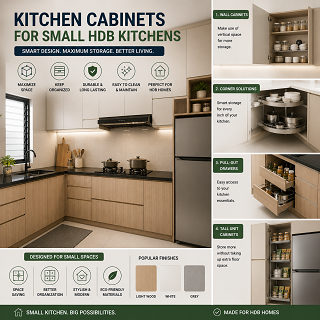
Most small kitchens feel cramped the second you step into them—pots clattering, countertops buried under clutter, and zero space to think, let alone cook. It doesn’t have to be that way. The right kitchen cabinet for small kitchen setups can turn chaos into calm. Smart storage isn’t about size—it’s about strategy.
Cabinets that go vertical, slide sideways, or tuck into corners can really help. Think slim pull-out pantries, overhead racks, or even cabinets that double as islands when needed.
Every inch counts.
And yes, you can have style *and* function without needing a renovation the size of a mortgage. The best solutions are simple, clever, and actually fit.
What kind of cabinets actually fit in a tiny kitchen?
Most standard cabinets eat up space fast—especially when every inch counts. But compact, shallow-depth wall cabinets? They’re game-changers. Sliding doors beat swing ones, and going vertical with tall, narrow units keeps storage smart without crowding the room. The trick is balancing function with footprint, so the kitchen feels open, not boxed in.
Why open shelving isn’t as scary as it looks
People assume open shelves mean constant mess, but that’s not how it plays out. They actually encourage tidiness. When everything’s on display, there’s a natural push to keep things neat. And honestly, a few pretty dishes or stacked bowls can make the space feel more lived-in and warm. It’s storage that doubles as decor.
The real magic of those skinny pull-out pantries
They tuck into gaps most kitchens waste—next to the fridge, beside the oven. Slide one open and suddenly, spices, snacks, and sauces have a home. No more digging behind the soup can to find the soy sauce. Everything’s visible, within reach, and out of the way. It’s like kitchen Tetris, solved.
These slim units aren’t just about saving space—they transform awkward slivers into hyper-functional zones. One 12-inch gap becomes a dedicated spot for oils, baking sheets, or even cleaning supplies. The vertical organization means nothing gets lost in the back. And because they pull out fully, every inch is usable. No more “black hole” cabinet syndrome. It’s not just storage—it’s smart storage. That kind of efficiency changes how a small kitchen works every single day.
Things you’ve seriously got to consider before buying
Small kitchens are having a major moment—especially with open-plan layouts and micro-homes on the rise. Picking the right cabinet means thinking long-term. It’s not just about looks… it’s about how it’ll hold up when the rush of dinner prep hits. One wrong choice and you’re stuck with clutter, frustration, and a kitchen that feels tighter than ever.
Measuring your space so you don’t mess up
Someone always skips this step—then wonders why their sleek new cabinet won’t fit through the doorway. Grab a tape measure and check every inch: height, width, depth—don’t forget ceiling and floor obstructions. And hey, measure twice. Because returning oversized cabinets? Not fun. Not fun at all.
Picking materials that won’t fall apart on you
Flat-pack particleboard might be cheap, but it swells up like a sponge if a drop of water hits it. Solid wood lasts, sure, but it can warp or cost a fortune. What’s actually holding up in real kitchens? Plywood with a moisture-resistant finish. It’s tough, stable, and doesn’t scream “I saved $200 and regret it.”
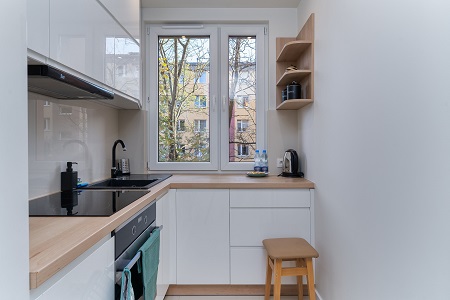
Moisture is the silent killer of cheap cabinets—especially near sinks or stoves. Humidity builds, edges start lifting, and suddenly your cabinet looks like it lost a fight. Plywood, especially with sealed edges, resists that slow breakdown. Thermofoil or laminate finishes add a shield without breaking the bank. And hinges? Go for soft-close metal ones—they’ll outlast plastic sliders by years. Build it right once, and you won’t be ripping it out in two.
My simple step-by-step for a smooth installation
Installing cabinets in a small kitchen doesn’t need to be a headache. With the right approach, it’s totally doable—even for weekend warriors with a drill and a dream. The key? Breaking it down into clear, manageable phases.
| Phase | Action |
| 1 | Clear space, prep walls, remove old cabinets |
| 2 | Locate studs and mark level lines |
| 3 | Hang upper boxes first, then lowers |
| 4 | Install doors, hardware, and trim |
Prepping your walls and getting the old stuff out
Some folks think you can just slap new cabinets over the old ones—don’t. Taking out the old cabinets saves headaches later. Drywall repairs, uneven surfaces, and hidden damage? Better to face them now. Clear the room, protect the floor, and strip it back to the studs. A clean wall means a clean install.
Hanging those boxes without losing your mind
Ever tried lifting a cabinet by yourself while balancing on a wobbly stool? Yeah, not fun. Two people make this way easier. Start with the uppers—use a level, hit the studs, and clamp boxes together before screwing. Get one perfectly straight, and the rest will follow. Patience here saves hours of crooked doors later.
Mounting cabinets isn’t about brute force—it’s about precision. The first upper cabinet sets the tone for the whole run, so take your time. Use shims to fine-tune the alignment, even if the walls aren’t perfect (and they rarely are). Once it’s snug and level, attach it securely to the studs—drywall anchors won’t cut it. Then, hang each subsequent box against the last, screwing through the side into the adjacent unit. This creates a solid, unified wall of storage. And seriously, don’t skip the helper. Trying to do this solo ends in frustration… and possibly a dented cabinet.
A few extra tips to make your small kitchen feel huge
- Install glass-front cabinets to visually expand the space
- Use a single-color palette for walls, cabinets, and countertops
- Hang a large mirror on a non-window wall to reflect light
- Keep countertops as clear as possible
- Opt for slim, rounded bar stools instead of bulky chairs
This creates the illusion of more room without major renovations.
Use every single inch of vertical space
Most people ignore the area above their cabinets, treating it like dead space. But that’s wasted storage-prime real estate in a tight kitchen. Tall shelves, hanging pot racks, or even decorative baskets tucked up high can add serious function. Reaching up is easier than crawling under, so stack what you can. Every inch counts when square footage is tight.
Why under-cabinet lighting is a total game-changer
Some think under-cabinet lights are just for show-like kitchen jewelry. But they do way more than look nice. They banish shadows when chopping or reading recipes. The counter actually becomes usable after sunset. This turns a dim, frustrating zone into a bright, functional workspace.
Under-cabinet lighting isn’t about aesthetics—it’s practical magic. Without it, even a well-designed kitchen can feel gloomy, especially in the evening or in windowless layouts. LED strips or puck lights bring instant clarity, making tasks safer and the whole space feel more open. So many homeowners skip this, then wonder why their kitchen feels closed in… it’s often just a lighting problem. Fix that, and the room feels twice as large.
To wrap up
Following this, many believe small kitchens can’t have functional cabinets—but that’s simply not true. Space-saving designs like corner units, pull-out shelves, and wall-mounted options maximize every inch. A well-planned cabinet layout transforms even the tiniest kitchen into a practical, organized space. It’s not about size. It’s about smart choices.
My favorite tips for keeping things organized when there’s no room
Small HDB kitchens force you to think smarter, not bigger. Use every inch wisely—pull-out larders, vertical storage, and pegboards turn dead spaces into heroes. You always win back space when you stop stacking and start hanging.
- Install pull-out larders in narrow gaps—they’re game-changers
- Maximize height with vertical storage up to the ceiling
- Swap cabinet doors for pegboards to see and reach everything
- Store items where you use them—no more junk drawers
- Use slim, stackable containers that fit tight spaces
Using pull-out larders so you don’t lose stuff in the back
You’ve had it happen—spices vanish behind the rice cooker, never to be seen again. Pull-out larders fix that mess all at once. They slide forward so you see everything at once—no more forgotten jars. You never waste money replacing what was actually just hiding.
Why you shouldn’t sleep on vertical storage and pegboards
Most people ignore the walls, but that’s where the free space lives. Vertical storage uses height instead of floor space—perfect for tall, narrow HDB kitchens. Pegboards turn blank walls into tool hubs. You actually gain room by going up, not out.
Think about it—your kitchen might be 2.4 meters wide, but the ceiling’s probably 2.7 meters high. That extra 30cm above your cabinets? Gold. Use slim shelves or hanging racks to store oils, herbs, or even small pots. And pegboards aren’t just for garages—slap one inside a cabinet door or beside the sink, add hooks and baskets, and suddenly your spatulas, measuring cups, and towels have a home. It’s not magic—it’s just smart use of space you already have. You reclaim cluttered counters just by looking up.
The real deal on why custom cabinets are better than ready-made
You’re staring at that awkward corner by the fridge, wondering why no cabinet fits right. That’s the thing—ready-made units follow standard sizes, but your HDB kitchen doesn’t. Custom cabinets use every inch, even those odd gaps most people write off. They’re built for how you actually cook, store, and live—not mass-produced for someone else’s floor plan.
Why every centimeter counts in a 3-room or 4-room flat
You’ve only got 6 sqm to work with—maybe less once the table’s in. That slim 5cm gap beside the washing machine can be used for a spice pull-out. It can hold a spice pull-out. Losing even 10cm to a poor layout means losing function. In tight HDB spaces, wasted space isn’t just inefficient—it’s a daily frustration you can’t afford.
My take on the “HDB tax” and what’s actually worth the money
You’ve heard the term—paying more just because you’re in an HDB. But not all upgrades are price hikes. Some contractors charge extra for ultra-narrow pull-outs or ceiling-height units… and that’s fair. You’re paying for precision, not branding. The real scam? Overpriced finishes that look cheap in three years.
Let’s be real—some “HDB packages” are just rebranded basic designs with a 20% markup. But what about custom joinery that fits your ceiling slope? Worth every cent. So are soft-close hinges on deep pantries—because slamming doors annoy the whole block. You don’t pay for the label—you pay for fit, function, and peace. Skip the fluff, invest in what you touch daily. That’s how you avoid the so-called tax without compromising on quality.
FAQ
Q: Can you actually fit decent storage in a tiny kitchen without it feeling cramped?
A: Absolutely—and you’d be surprised how much smart cabinet design can do in a shoebox-sized space. The trick? Go vertical. Floor space might be limited, but your walls are wide open. Tall cabinets that reach the ceiling give you serious storage without eating up square footage. Use the top shelves for things you don’t grab every day—holiday dishes, extra linens, that fondue set you used once in 2017. And don’t sleep on corner cabinets—they’re usually wasted space, but with a lazy Susan or a pull-out carousel, you can finally use every inch. Sliding doors or pocket doors on cabinets can also help when there’s no room for doors to swing open. Think about it—how many times have you bumped into an open cabinet door while trying to move around a tight kitchen? Yeah, exactly. So yes – a small kitchen doesn’t mean no storage. It just means you’ve got to be clever about it.
Q: What kind of cabinets make a small kitchen look bigger?
A: Light colors—think white, soft gray, or pale wood tones—instantly open up a space. Dark cabinets aren’t off-limits, but they can make a small room feel like a closet if you’re not careful. Glossy finishes help too—they bounce light around, especially if you’ve got a window or under-cabinet lighting. But here’s the real game-changer: handleless cabinets. Yeah, the ones that look like smooth, seamless panels. They create clean lines and reduce visual clutter. No pulls, no distractions—just a calm, airy feel. You can get the same effect with simple bar pulls or recessed finger grips—anything that doesn’t stick out and break the flow. And please keep in mind glass-front cabinets. One or two can make the space feel less boxed in—just don’t overcrowd them. Keep them neat—a few pretty dishes, maybe a plant—and they add charm, not chaos. Oh, and full-height cabinets with no break at the countertop? Big yes. They draw the eye up and make ceilings feel higher. It’s like the kitchen version of wearing vertical stripes.
Q: Are custom cabinets worth it for a small kitchen?
A: If your space has weird angles, sloped ceilings, or awkward corners, custom is probably worth it. Stock cabinets come in standard sizes, which means you might end up with gaps, dead zones, or doors that can’t open all the way. Custom cabinets fit like a glove—they use every inch, even the slivers you’d normally write off. Need a pull-out spice rack in a 6-inch gap? Done. Want a cabinet that curves around a pipe? Totally doable. But let’s be real—custom isn’t cheap. If you’re on a tight budget, semi-custom might be the sweet spot. You get more flexibility than a stock one without the full custom price tag. And honestly, even with off-the-shelf units, smart layout choices matter more than price. A well-planned stock setup can outperform a poorly designed custom one any day. So ask yourself—are you dealing with a truly odd space? Or can you work within standard dimensions and just focus on smart features? That answer will tell you whether custom is a luxury or a necessity.
Q: How can I best use the limited space when choosing cabinets for a small HDB kitchen?
Have you ever looked at your kitchen and wondered, “How am I supposed to fit anything useful in here?” You’re not alone. Most HDB kitchens are compact—we’re talking 2 to 3 meters max. So your cabinet layout needs to be smart, not just visually appealing. Go for tall overhead cabinets that reach the ceiling—wasted space up top is a missed opportunity. Use slim pull-out pantry cabinets between the fridge and wall—they fit in gaps under 15cm and hold spices, oils, and even cleaning spray. Corner cabinets with lazy Susans? Game changer. No more forgotten soy sauce bottles rotting in the back. And skip bulky upper cabinets above the sink—open shelving there makes the space feel bigger and lets you grab mugs without crouching.
Q: Should I go for handleless cabinets in a small kitchen?
Handleless cabinets look sleek, and there’s no denying it. But in a tight HDB kitchen, sleek isn’t always practical. If your cabinets are right next to the dining table or a narrow walkway, protruding handles can snag clothes or bump into people passing by. Handleless designs with push-to-open mechanisms keep things flush and safe. But here’s the catch—cheaper laminates can warp over time, and the push mechanism might stop working smoothly. So if you go handleless, invest in decent hardware and solid build quality. Cheap ones feel flimsy after six months. And honestly, a slim D-handle or recessed finger pull gives you the clean look without the frustration.
Q: What cabinet materials hold up best in Singapore’s humidity?
Let’s be real—Singapore’s weather is like a sauna with extra condensation. Moisture warps cheap particleboard in no time. You open your cabinet one morning, and bam—the door sags like it’s given up on life. Avoid standard MDF or low-grade plywood unless it’s properly sealed. Go for moisture-resistant materials like marine plywood or high-pressure laminate (HPL). They cost a bit more upfront but save you headaches later. And watch out for warranties—some carpenters claim their finish is “waterproof,” but the guarantee lasts only a year. If they’re confident, they’ll offer 5+ years. Furthermore, check how the edges are sealed. Unsealed edges? That’s where swelling starts.
Q: Is it worth getting custom cabinets, or should I stick to modular ones?
Modular cabinets are cheaper and faster—no argument there. But HDB kitchens are weird shapes. You’ve got pipes in odd places, sloping beams, or a window that cuts into wall space. Off-the-shelf units don’t bend for quirks. Custom cabinets fit perfectly—you can design around the gas pipe, tuck a narrow drawer under the window, or add a fold-down table that fits into a cabinet. Yes, they cost more. But think long-term—you’re not moving every two years. And if you plan to stay, custom means no wasted corners, better storage, and a kitchen that actually works for *your* routine. Just pick a reliable carpenter—ask for photos of past HDB jobs, not showrooms.
Q: What colors and finishes make a small kitchen feel bigger?
White makes a space feel larger—we’ve all heard that. But pure white cabinets in a humid kitchen? They’ll show every greasy fingerprint and water spot. Glossy finishes reflect light, which helps, but they also highlight every dent and uneven surface. Matte laminates in light grey, soft beige, or pastel blue give brightness without the high-maintenance drama. And two-tone cabinets can work wonders—light uppers with darker lowers ground the space and stop it from feeling like a dentist’s office. Use glass-front cabinets for a few upper units—they break the visual mass and let you show off your best glasses. Just don’t overdo it. Too much glass feels cluttered. And if you’re really tight on space, mirror-backed cabinets can create a subtle illusion of depth—like the kitchen goes further than it does.