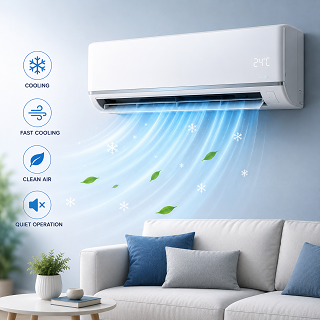
There’s nothing quite like walking into a cool, comfortable flat after braving the Singapore heat… only to realize your old air conditioner is gasping for retirement. If you’re upgrading in your HDB home, you’re not just buying an appliance – you’re investing in daily comfort for years to come. Choosing the wrong unit can mean sky-high electricity bills and constant repairs.
And not all air conditioners are built for HDB layouts. Units over 10,000 BTU may not comply with HDB’s external condenser regulations – a detail many buyers overlook until it’s too late. You need the right size, energy rating, and installation plan tailored to your flat type.
So, how do you pick one that cools well, saves power, and fits HDB rules? This guide breaks it down simply – no jargon, no fluff. Just clear, practical advice so you make a smart, stress-free choice.
What’s the deal with all these different aircon types?
You’ve probably seen terms like split system, portable unit, ductless, and inverter technology while browsing aircons-confusing, right? Here’s a quick breakdown:
- Split system: Indoor and outdoor unit, most common in HDBs
- Portable unit: No permanent install, just vents out a window
- Ductless: Same as split-no ductwork needed
- Inverter technology: Saves power by adjusting compressor speed
- Window unit: Built into the wall or window, rare in Singapore HDBs
Assume that
| Type | Best For |
| Split (System 3/4) | HDB flats, energy efficiency |
| Portable | Renters, temporary cooling |
| Inverter | Lower electricity bills |
| Non-inverter | Budget buyers, short-term use |
Why a System 3 or 4 is usually the way to go for HDBs
Most HDB flats come with pre-installed aircon ledges designed for outdoor units-this makes System 3 or 4 split aircons the natural fit. They’re efficient, quiet, and built to handle Singapore’s humidity. You’ll save more on electricity over time thanks to inverter tech. Assume that
Portable units vs split systems: what’s actually better?
Portable units sell big on convenience-just plug and go. But they’re noisy, less efficient, and struggle in humid weather. Split systems need installation but cool faster and run quieter. They’re built for real, everyday comfort. Assume that
Did you know portable aircons can actually add heat to your room while running? That’s because the compressor and exhaust are all in one box-sitting right inside your space. Split systems move the hot parts outside, so your room stays cooler without fighting itself. And let’s be real-when it’s 34°C at 8 PM and your portable unit’s wheezing like it’s on life support, you’ll wish you’d gone with a proper inverter split system. They cost more upfront, sure, but they last longer, use less power, and actually keep you cool during the worst of the haze season. You’re not just buying a gadget-you’re buying sleep, comfort, and sanity.
What Factors Should You Really Look For Before Buying?
- Energy efficiency – more NEA ticks mean lower bills
- BTU rating matched to your room size
- Installation type – split, window, or portable
- Noise level, especially for bedrooms
- Warranty and after-sales service
Thou know the specs on paper, but real comfort comes from matching the unit to your flat’s actual needs.
Why those NEA energy ticks are a total game-changer
You ever seen that little energy label with the ticks? That’s not just decoration. The more NEA ticks, the less your aircon guzzles power – and trust me, over a year, that difference hits your wallet… hard. A 5-tick model might cost a bit more upfront, but you’ll save hundreds in electricity. Lower energy use = smaller bills and a cooler planet.
Getting the BTU right so you don’t waste cash on electricity
Too many people slap in an oversized unit thinking it’ll cool faster. Nope. An overpowered aircon cools too quickly, cycles off, then back on – wasting energy and never dehumidifying properly. Match the BTU to your room size and you’ll get steady comfort without the spike in bills. Right-sizing saves money every single month.
Let’s say your living room is 150 sq ft – a 9,000 BTU unit should do. But if you go for 12,000 BTU “just to be safe”? It’ll short-cycle, wear out faster, and use 20-30% more power. And because it doesn’t run long enough, the air feels clammy, not crisp. So you crank it down… and the bill climbs. Perfect BTU = efficient cooling + dry air + lower cost. It’s not about power – it’s about precision.
My take on the step-by-step process for HDB owners
Getting your air conditioner installed in an HDB flat isn’t just about picking the fanciest model – it’s a careful dance between rules, space, and smart choices. You’ve got to move step by step, or you’ll end up with a costly mistake.
| Step | Action |
|---|---|
| 1 | Check HDB’s official guidelines on AC installation |
| 2 | Confirm outdoor ledge compatibility and load limit |
| 3 | Choose energy-efficient, HDB-compliant models |
| 4 | Hire a licensed contractor for installation |
| 5 | Submit installation notice to Town Council if required |
Checking those tricky HDB installation rules first
You can’t just slap an outdoor unit anywhere – HDB has strict rules. Ignoring them could mean fines or forced removal. Always check the latest guidelines on pipe routing, condensate drainage, and approved locations before buying a single component.
Picking the right spot in your flat for the outdoor ledge
Location matters more than you think. The wrong placement kills efficiency and annoys your neighbours. Make sure the ledge can handle the weight, has proper airflow, and doesn’t block emergency escape routes – safety isn’t optional.
Think your balcony or kitchen ledge is fine? Not so fast. HDB classifies ledges by type – some are only for drying clothes, not aircon units. You’ve got to verify if your chosen ledge is structurally rated for the outdoor unit’s weight – usually no more than 100kg. And don’t forget airflow: if the unit’s crammed between walls or facing direct afternoon sun, it’ll work harder, wear out faster, and spike your electricity bill. Position it where it can breathe… and where the hot exhaust isn’t blasting into your neighbour’s bedroom window – trust me, peaceful neighbour relations start with smart placement.
Seriously, here’s some tips to keep your unit running forever
Small habits make a huge difference in how long your air conditioner lasts. Clean filters every two weeks, keep the outdoor unit free from debris, and always set a reasonable temperature-25°C is sweet spot. Schedule professional checks yearly. After
- Wiping down the grilles with a damp cloth
- Clearing leaves and dust from around the condenser
- Checking for odd noises or water leaks
- Using a cover during long idle periods (but only when dry!)
Quick ways to do some DIY cleaning between major services
You don’t need tools to keep things running smoothly. Just power off the unit and remove the front panel to vacuum the air filter-it collects dust fast in HDB flats. Wipe the blades gently with a microfiber cloth and check the drip tray for gunk. After a quick clean, you’ll notice better airflow and cooler air almost instantly.
Why regular professional servicing isn’t just a suggestion
Your aircon hides grime in places you can’t reach. Over time, slime builds up in drainage pipes and coils get coated in muck, making your unit work harder. A pro doesn’t just clean-they check refrigerant levels, test electrical parts, and catch small issues before they become expensive breakdowns. After
Think of it like a car-would you skip oil changes and just refill the petrol? Your air conditioner works non-stop in Singapore’s heat, battling humidity and dust daily. Without a full chemical wash every 6-12 months, mold grows inside, efficiency drops, and your electricity bill climbs. Worst part? A poorly maintained unit can leak or even stop cooling mid-heatwave. That’s not an inconvenience-it’s a crisis in a 3-room HDB flat with no backup. After servicing, your unit doesn’t just run better-it lasts years longer and keeps your family breathing cleaner air.
Conclusion
With these considerations, you’re now equipped to choose an air conditioner that fits your HDB flat perfectly. Singapore households spend over 30% of their electricity on cooling-so picking the right unit isn’t just about comfort, it’s about smart spending. You know what size suits your room, why inverter tech saves you money, and how energy labels actually matter. And let’s be real-nobody wants a unit that’s noisy, inefficient, or too weak for our humid weather. So go ahead, compare models, check the specs, and make a choice that keeps you cool without melting your wallet.
FAQ
Q: What size air conditioner do I actually need for my HDB flat?
A: Most HDB bedrooms are between 10 to 15 square meters – that means a 9,000 to 12,000 BTU unit will do the job just fine. Go too small and you’ll be sweating through the night. Go too big and it’ll cool too fast, cycle off, and leave the room feeling clammy. Humidity stays high if the unit doesn’t run long enough to dehumidify properly.
I made this mistake once – bought a 14,000 BTU for my 12m² room because I thought “bigger is better.” Nope. It turned into a mini ice cave for 10 minutes, then shut off… and within 20 minutes, the room felt sticky again.
So measure your room. Length times width. If it’s under 12m², stick with 9,000 BTU. 12 to 15m²? 12,000 BTU is your sweet spot. Trust me, it makes a difference.
Q: Should I get a window or split air conditioner for my HDB?
A: Window units are cheaper and easier to install – but they’re loud, block part of your view, and some HDBs actually restrict them now. Split air conditioners? They’re the go-to for most people these days.
They’re quieter, look cleaner, and don’t mess with your window space. But – and this is a big but – installation is trickier. You need an outdoor condenser ledge, and not every HDB room has one. Check your flat’s layout first. <br
My cousin tried to install a split unit in his older HDB – turned out the wall wasn’t reinforced. Had to reroute pipes, cost him an extra $200. So don’t skip the site check.
If your room already has a condenser slab or a pre-installed sleeve, go split. If not, and you’re on a tight budget, a window unit might be your only real option.
Q: Are inverter air conditioners worth the extra cost in Singapore?
A: Yes. Hands down. They cost more upfront – we’re talking $200 to $400 extra – but they use up to 30% less electricity over time. In Singapore’s heat, where your AC might run 10 hours a day, that adds up fast.
Non-inverter units blast full power until the room’s cool, then shut off. When it warms up again? Full blast. This on-off cycle guzzles power. Inverter models adjust their speed – like a car cruising instead of stop-starting in traffic.
I switched to an inverter last year. My electricity bill dropped by $35 a month. That’s $420 a year. Payback period? Less than two years. After that, it’s all savings.
And the bonus? Quieter operation and more consistent temperature. No more waking up freezing at 3am.