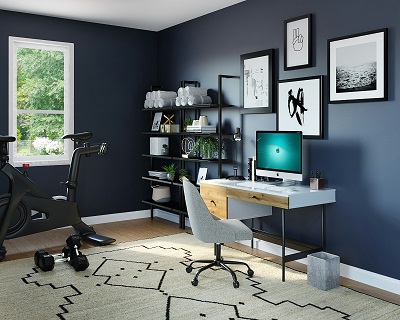
Productivity doesn’t demand a walk-in office or designer furniture-especially when you’re working with a 4-room HDB flat. You don’t need extra space, you need smart use of what you already have. And yes, that corner behind the sofa? It counts.
Thinking you need to sacrifice your living room to work well? That’s the biggest myth. Most people just shove a desk in and call it a day-but that’s how you end up with back pain and zero focus.
A well-placed foldable desk can save 3x more space than a bulky one. Natural light near the window boosts alertness-so don’t block it with a giant monitor wall. Use vertical storage. Go cable-free where possible.
Your environment shapes your output. A cluttered, dim, noisy setup kills concentration fast. But a clean, bright, quiet zone-even if it’s just 1.5 meters wide-can double your focus in under a week.
So, where will you carve out your zone? The kitchen nook? Under the TV console? Between the bedrooms? It’s not about size. It’s about intention.
Where are we actually putting this desk?
You’re not alone if your HDB feels too small for a dedicated office-most do. But you don’t need a spare room to work well. The key is rethinking how you use what you already have. Even 1.5 square metres can become a functional workspace if placed right. It’s less about size and more about smart positioning.
Why I think the living room corner is your best bet
Most HDBs have a living room that doubles as a family hub-and that’s exactly why it works. Tucking your desk into an unused corner keeps you part of the household rhythm without full isolation. You stay connected but still claim a zone just for focus. Just avoid facing a wall; sightlines to natural light help you stay alert.
How to hunt for “hidden” space in your HDB
Start by walking through your flat like a detective-noticing gaps you’ve ignored for years. That sliver beside the kitchen counter? Could fit a slim desk. The alcove near the entrance? Maybe it’s a workstation in disguise. Unused vertical space is often your biggest untapped resource. Look up, look sideways, look behind doors.
Think about how your furniture blocks potential instead of enabling it. Could shifting the sofa five inches open up room behind it? What if you swapped a bulky console for a fold-down table? Some of the best home offices in HDBs are built in spots people didn’t even realize could hold a chair. Measure every nook-especially near windows or power points. And don’t sleep on under-bed or under-window zones; with the right low desk, they can pull double duty. It’s not about finding space-it’s about claiming it.
How to stop your flat from feeling like a dark cubicle
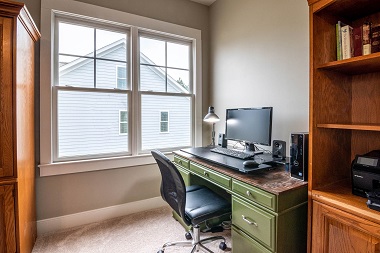
You ever walk into your home office and feel like you’re back in that soul-sucking corporate basement? Light has a massive impact on mood and focus-especially in tight HDB spaces. Without enough brightness, even the most organised desk setup can feel oppressive. The good news? You don’t need floor-to-ceiling windows to fix it. Assume that
Factors that make natural light your best friend
Why does sunlight feel so much better than flicking on a lamp? Natural light boosts alertness, regulates sleep cycles, and makes small rooms feel airy. It reduces eye strain during long work hours and lifts your mood without any effort on your part. Position your desk near a window-yes, even if it means rearranging your entire living zone. Assume that
- Daylight exposure improves concentration and reduces fatigue
- Windows facing east or west get the most usable light in Singapore
- Sheer curtains let in light while keeping your privacy intact
- Light-coloured walls reflect sunlight deeper into the room
My take on why smart bulbs are worth the hype
Think changing a lightbulb is boring? Try one that changes colour with your mood. Smart bulbs let you tweak brightness and warmth from your phone-perfect when natural light fades but you’re still grinding. Need focus? Crank it to cool white. Winding down? Shift to warm amber. No more harsh overhead glare at midnight. Assume that
You’re not just buying a bulb-you’re installing a mood regulator. These little tech upgrades adapt to your work rhythm, whether you’re in deep focus mode or trying to ease into bedtime. Some even sync with sunrise and sunset, so your flat feels in tune with the day. And honestly, being able to dim the lights without getting up? That’s not laziness-that’s smart design. You’ll wonder how you worked without it.
Seriously, how do we hide all these cables?
Cables don’t have to turn your workspace into a jungle. Use adhesive cable clips or braided sleeves to bundle wires neatly along desk edges – it’s insane how much cleaner that looks. Run cords behind furniture or through simple wall-mounted raceways. And yes, you *can* hide your power strip under the desk… just don’t forget where you put it.
How to keep your tech from looking messy
You don’t need to live with a tangle of chargers and adapters on display. Keep only what you use daily in sight – everything else goes. Use a fabric-covered box or a slim drawer to stash extras. A clean tech zone means fewer visual distractions and way more focus when you’re trying to get things done.
Why vertical storage is a total life-saver
When floor space is tight, your walls are your best friend. Floating shelves or pegboards keep importants within reach without eating up square footage. You’d be shocked how much you can store above eye level – and how much calmer your space feels when everything’s off the ground.
Think about it – your walls are probably doing nothing but holding up photos of last year’s vacation. But they could be holding your notebooks, headphones, even your laptop stand. Install a slim pegboard with hooks and small bins – suddenly, clutter disappears and your workflow improves. Vertical storage turns dead space into prime real estate, and in a small HDB flat, that’s basically winning the lottery.
Isn’t it time you got a chair that doesn’t hurt?
You’ve been sitting on that dining chair for weeks now, telling yourself it’s “fine” – but your lower back screams otherwise. A proper seat isn’t a luxury, it’s a necessity, especially when your HDB flat doubles as your office. Pain isn’t just distracting, it chips away at your focus and energy. You deserve comfort that supports your body, not fights against it. Recognizing that your current setup is holding you back is the first real step toward change.
Key factors for choosing an ergonomic seat
Think all office chairs are the same? Think again. A cheap seat might save dollars now but cost you in stiffness and lost productivity. Look for adjustable height, lumbar support, and a breathable mesh back – these aren’t extras, they’re vitals. A good base lets you pivot without straining, while armrests at elbow level keep your shoulders relaxed. Recognizing the long-term value of a supportive chair turns a purchase into an investment.
- Adjustable height – so your feet rest flat on the floor
- Lumbar support – maintains the spine’s natural curve
- Breathable mesh back – keeps you cool during long hours
- Swivel base with casters – allows easy movement without strain
- Armrests at elbow level – prevents shoulder tension
Tips for setting up your monitor so you aren’t slouching
You’re leaning forward just to read the screen, aren’t you? That tiny laptop on the coffee table is slowly pulling your spine out of alignment. Your eyes should hit the top third of the screen at eye level – not below. Use a laptop stand, stack of books, or even a sturdy box. Keep the screen an arm’s length away and avoid glare with proper lighting placement. Thou shall not hunch – your neck will thank you.
- Top of screen at or slightly below eye level – prevents neck strain
- Arm’s length distance – reduces eye fatigue
- Direct lighting, no glare – improves visibility and comfort
- External keyboard and mouse – allows proper hand positioning
Let’s be real – most of us just plop the laptop wherever there’s space. But that “good enough” spot often means craning your neck down, rounding your shoulders, and slowly turning into a question mark. Over time, that posture leads to chronic tension, headaches, even numbness in your hands. Positioning your monitor correctly isn’t fussy – it’s foundational. Use a stand, raise it on books, or mount it if space allows. Connect an external keyboard so you’re not typing with your arms elevated. Thou shall sit tall, not cave in like a tired shrimp.
How do we actually stay focused when the bed is five feet away?
You think working from your bedroom is harmless until you find yourself lying down mid-task. The truth? Proximity to your bed kills focus fast-your brain associates it with rest, not work. Set a hard boundary: no laptops under the covers, no “just five more minutes” traps. Perceiving your sleep zone as strictly off-limits keeps productivity alive.
Tips for blocking out the noise of the neighborhood
Everyone assumes HDB life means constant distractions-from aunties chatting in the corridor to kids racing down the hall. But you can still create quiet. Use these tools to reclaim your focus:
- Invest in noise-cancelling headphones-they’re a game-changer for sudden karaoke sessions next door
- Play white noise or ambient café sounds to mask unpredictable bursts
- Close windows during peak delivery hours to reduce street clamor
Perceiving background chaos as manageable-not inevitable-lets you stay in the zone.
My honest thoughts on setting “office hours” at home
You don’t need a 9-to-5 cage to be productive-yet pretending you can work anytime leads to burnout. Setting fake “office hours” sounds rigid, but it actually frees you. Start when you’re sharpest, stop when your brain quits. Perceiving time as your ally-not your boss-changes everything.
Let’s be real-no one follows their calendar perfectly when working from a 3-room flat. But having loose office hours isn’t about rigidity, it’s about rhythm. When you signal to yourself (and your family) “this is work time,” you build mental separation. Without it, tasks bleed into dinner, into bedtime, into your sanity. And that one email at 10 PM? It can wait. Because boundaries aren’t limits-they’re what keep you sane in a space where work and life share the same four walls.
Summing up
Now, you don’t need a walk-in room to have a workspace that actually works. A tiny corner in your HDB flat can become your daily command center-just pick the right spot, keep clutter in check, and light it well. You’ve got limited square footage, sure, but that forces smarter choices. Your focus matters more than space. Stick to what helps you move faster, think clearer, and stay off the couch. Done right, your small office doesn’t feel small at all.
FAQ
Q: How do I fit a proper workspace into a tiny HDB room without it feeling like I’m working inside a cupboard?
Ever tried typing while your elbow knocks over a glass of water on the dining table? Yeah, we’ve all been there. The trick isn’t about finding space-it’s about rethinking how you use it. Start by claiming a corner, even if it’s just 1m x 1m. A wall-mounted fold-down desk is a game-changer-set it up above a console table or beside the TV, and fold it away when work ends.
Use vertical space like your life depends on it. Floating shelves keep your laptop, notebooks, and charger within reach but off the desk surface. Tuck a slim rolling cart underneath for storage-slide it out when needed, hide it behind the door when not.
And lighting? Don’t rely on the ceiling bulb. A small adjustable desk lamp saves your eyes and makes the area feel intentional.
It’s not about having a big room-it’s about making one spot feel like *your* spot.
Q: My flat is noisy-kids, neighbours, the whole block seems to share one wall. How can I actually focus?
So your neighbour’s toddler has discovered drums at 8 a.m., and your cousin’s Zoom call is echoing from the living room. Peace? Forget it. But focus? That you can still grab.
First, noise-cancelling headphones aren’t just for flights-they’re survival gear for HDB life. Even mid-range ones make a huge difference. Pair them with a white noise app or low-fi beats, and suddenly the chaos fades into background mush.
Then look at your layout. Can you position your desk facing a wall instead of the middle of the room? It creates a psychological barrier-even if it’s just paint. Hang a thick tapestry or a bookshelf with gaps to break up sound waves.
And if possible, sync your deep work with quieter hours. Early mornings or late evenings might be your golden windows.
You can’t control the noise-but you can control how much of it *sticks*.
Q: How do I keep my work stuff from taking over my entire home life?
One laptop on the dinner table turns into cables everywhere, sticky notes on the fridge, and suddenly you’re answering emails during family movie night. Sound familiar?
The fix starts with boundaries-physical and mental. Use a storage box or a fabric basket to stash your work items at the end of the day. Close the lid. Out of sight, out of mind. If you’ve got a foldable desk, shut it down and throw a scarf over it-turns it into a shelf in seconds.
Set a shutdown ritual. Maybe it’s closing all browser tabs, writing tomorrow’s to-do list, or just saying out loud, “Work’s done.” Sounds silly, but it works.
And talk to your household. Let them know when you’re “on” and when you’re “off”-even a little sign on your chair helps.
Your home shouldn’t feel like an office extension. It’s your sanctuary. Protect that.